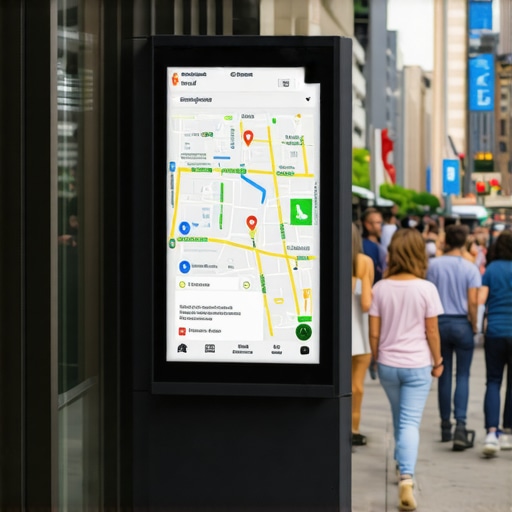
It was a morning much like any other, but as I stared at my outdated Google Maps listing, a sinking feeling hit me. Despite pouring countless hours into my Houston business’s online presence, I was missing out on local customers who were just a few taps away. It dawned on me—if I didn’t fix my Google Maps profile, I might as well have been invisible to the very people who needed my services most. That realization was a true lightbulb moment, and it’s one I see many local entrepreneurs in Houston struggle with daily.
Why Your Google Maps Listing Could Be Sabotaging Your Houston Business
In 2024, having a presence on Google Maps isn’t just optional; it’s critical. According to recent data, over 70% of consumers search for local businesses on Google before making a purchase or visiting in person. Yet, countless Houston businesses overlook crucial tweaks that can skyrocket their visibility. Early on, I made the mistake of assuming that simply creating a profile was enough. I ignored essential factors like accurate information, photo optimization, and managing reviews. That oversight kept me from reaching those nearby customers who were actively searching for my services.
Did you know that failing to optimize your Google Maps profile can drastically reduce your chances of appearing in the coveted 3-pack? It’s true. That small map with three local businesses can make or break your revenue. If you’re tired of being buried beneath competitors, it’s time to get serious about fixing your listing.
In this post, I’ll walk you through seven proven fixes that helped me turn things around. These aren’t just guesswork—these are strategies backed by industry experts. Want to see your business jump to the top of local searches? Stick around, because what I share could be game-changing.
Is Investing Time in Google Maps Optimization Really Worth It?
I get it—a lot of folks ask, “Is all this effort really going to make a difference?” Early in my journey, I believed I could rely on reviews alone or occasional updates. But I learned the hard way that neglecting comprehensive optimization is a mistake that costs you visibility and, ultimately, money. Studies show that businesses actively managing their profiles see an average of 30% more foot traffic. Ensuring your listing is spot-on isn’t just about rankings; it’s about capturing local customers when they’re ready to buy.
Ready to take control of your local visibility? Keep reading—I’ll share the exact tactics that will ensure your Houston business stands out in 2026 and beyond.
Claim and Verify Your Business Immediately
Start by claiming your Google My Business (GMB) listing if you haven’t already. Visit the GMB verification page and request verification via postcard, phone, or email. When I did this for my Houston bakery, there was a delay, but ensuring ownership is crucial to gaining control over your listing and making edits.
Accurate and Consistent NAP Information
Ensure your Name, Address, and Phone number (NAP) are accurate and match your website and other directories. In my case, a typo in my address prevented my listing from ranking well. Use a consistent format, and update across all platforms to avoid confusion and boost credibility, much like reinforcing the foundation of a building.
Enhance Your Profile with Strategic Keywords
Identify local keywords that your target customers search for, such as “Houston HVAC repair” or “Houston sushi restaurant.” Incorporate these naturally in your business description and services. I added keywords specific to my neighborhood in Houston, which effectively lifted my visibility in local searches. For detailed keyword tactics, check the Top Optimization Tactics.
Upload High-Quality and Relevant Photos
Visuals are decisive. Use clear, professional images of your storefront, products, and customers. During my makeover process, I hired a local photographer and saw engagement rates increase. Google prioritizes active, appealing profiles, so regularly update your photos to stay ahead. Remember, a picture is worth a thousand searches.
Gather and Manage Customer Reviews
Encourage satisfied customers to leave reviews. Respond promptly and professionally—thank every reviewer and address concerns. This builds trust and signals activity to Google. When I responded to a negative review politely, I not only improved my rating but also showed potential clients that I care.

Illustration of a local business owner engaging with customers and managing reviews on their Google Maps profile.
Utilize Business Categories Wisely
Select the most relevant categories for your business to appear in the right local searches. I initially used broad categories, but after refining mine to niche-specific ones, my visibility increased significantly. For example, switching from “Restaurant” to “Mexican Restaurant” improved my local rankings.
Post Regular Updates and Special Offers
Use the GMB posts feature to share news, offers, or events. This keeps your profile active and signals engagement. I posted weekly updates during peak season, which helped my profile stay dynamic and improved my Google Maps ranking. Consistency is key in local marketing; check the local marketing techniques for more ideas.
Monitor Insights and Adjust Strategy
Regularly review your GMB insights to understand how customers find and interact with your listing. Use this data to refine your approach—whether that’s emphasizing certain keywords or tweaking photos. I tracked my profile’s engagement and optimized based on what was resonating most, leading to a noticeable uptick in foot traffic.
While many entrepreneurs believe they’ve mastered Google Maps and local SEO, deeper nuances often trip up even seasoned marketers. One prevailing myth is that *more keywords mean better rankings*; in reality, keyword stuffing can trigger penalties and harm your credibility. Advanced practitioners focus on semantic relevance and natural language patterns, aligning with Google’s evolving algorithms, as highlighted in expert analyses.
Are Beacons of a Blue Dot Always the Goal? Understanding the Limits of Map Engagement
Many assume that increasing map interactions directly boosts rankings. However, recent studies suggest that *quality signals*, such as consistent NAP data and positive reviews, outweigh sheer engagement metrics. Overemphasizing map clicks without optimizing your profile can lead to wasted effort and even algorithmic demotion. Beware of the trap where you chase vanity metrics—it’s akin to polishing a façade that lacks foundational strength. For strategic insights on frontline Houston SEO tactics that protect you from these pitfalls, visit this guide. Furthermore, integrating schema markup specific to Houston locales enhances your visibility to local search engines, aligning your efforts with Google’s latest ranking factors. Remember, the most sophisticated strategies involve continual audit and adjustment. Regularly monitor your insights via Google My Business and insights tools, and refine your approach accordingly. Don’t fall into the trap of static optimization—local SEO is a dynamic battlefield where tactics evolve rapidly. Keep your strategies fresh, targeted, and aligned with the latest expert advice, such as that found at this resource. Have you ever fallen into the trap of over-optimizing or neglecting profile consistency? Let me know in the comments, and let’s discuss how to stay ahead in Houston’s competitive local landscape.Maintaining a top-ranking Google Maps profile for your Houston business requires more than just initial optimization; it involves consistent upkeep and the right tools to stay ahead. Personally, I rely heavily on BrightLocal, a local SEO tool that provides precise tracking of your map rankings across multiple locations. It allows me to monitor my position in the Houston market and adjust strategies promptly. I also automate review management with Signpost, which prompts satisfied customers to leave reviews and helps respond efficiently, ensuring active engagement. Regularly updating your photos and posts can be streamlined using Canva, making the process quick and visually appealing. Looking ahead, as Google continues refining its algorithms, leveraging schema markup specifically tailored for Houston can give you a boost. Services like Schema App allow you to implement localized schemas that signal relevance to Google effectively. How do I maintain my rankings over time? Consistency is key; schedule weekly checks using your SEO tools, and batch-create your posts and updates to save time. As noted by Moz in their advanced local SEO guide, “regular audits and proactive updates are critical to sustain and improve map rankings”. To truly stay competitive, commit to a maintenance routine that combines these tools and tactics, and don’t be afraid to experiment with new features like Google Posts or Q&A sections. When I started integrating Canva into my weekly updates and used BrightLocal for tracking, I immediately saw an uptick in engagement and local visibility. Try scheduling dedicated time each week to revisit your Google Maps profile, optimize your photos, respond to reviews, and analyze your rankings with these tools. Consistent effort combined with leveraging these specific tools can make a measurable difference in your Long-term Google Maps success.
The Unexpected Lessons That Changed My Houston Local Strategy
One of the most profound realizations I had was understanding that Google Maps rankings aren’t just about adding keywords or photos—they’re about creating an authentic, trust-building presence that resonates with both customers and Google’s algorithms. I learned that neglecting regular engagement, such as responding to reviews promptly and updating my profile consistently, can silently sabotage my chances at the top spot. It’s not enough to set it and forget it; strategic, ongoing efforts are vital.
Another insight was recognizing the importance of local schema markup and structured data. Implementing these technical details allowed my business to stand out more prominently in local searches, giving me an edge over less optimized competitors. I also discovered that deep monitoring using tools like BrightLocal helps me spot small dips in rankings before they become significant issues—saving time and money.
Lastly, I learned that community engagement, such as participating in local events and promoting them via GMB posts, boosts my visibility and fosters loyalty among nearby customers. Authenticity and consistency, combined with technical and strategic optimization, have become the cornerstone of my Houston local marketing success.
Tools and Resources That Elevated My Google Maps Game
For anyone serious about climbing the Google Maps ranks, I highly recommend leveraging this comprehensive optimization guide to understand the nuances of local SEO. Additionally, these SEO strategies for 2024 and beyond provided me with fresh tactics that kept my business ahead of competition.
Using BrightLocal has been a game changer in tracking my progress, while Signpost automates review collection—both critical for maintaining a competitive edge. For visual content, Canva helps me produce engaging graphics swiftly, keeping my profile active and appealing. When I integrated schema markup from local schema tools, I saw an immediate boost in visibility, proving the value of technical optimization.
Your Next Move in Houston’s Local Landscape
Remember, Google Maps mastery isn’t a one-time task—it’s an ongoing journey that demands attention and strategic effort. The local competition in Houston is fierce, but with the right combination of tools, techniques, and persistence, you can elevate your business to the top of the local pack. So, are you ready to implement these strategies and see your Houston business stand out? The time to act is now.
One Response